
FirstPlug® Alpha 2.0: A Smarter Implant Screw Channel Barrier Workflow in One Cut

Updated: Apr 11
Written by Drs. Alexander Shor and Jim Janakievski.

Managing dental implant screw access channels is one of the most routine and most overlooked steps in implant dentistry. For years clinicians have reached for whatever was close at hand: PTFE plumbing tape from the hardware store, cotton pellets, gutta-percha, or silicone impression material. None of these were designed for this purpose. FirstPlug was created to solve this problem, and Alpha 2.0 takes it further.
Screw Channel Barrier Material: The Problem with Good Enough
The screw access channel sits at the intersection of biology and mechanics. Wrong barrier materials can create challenges such as longer placement and removal time, poor sealing from oral environment, and a lack of biocompatibility.
The ideal barrier material needs to:
Seal reliably without locking the screw head recess
Allow for efficient placement and removal
Support the overlying composite without subsidence
Be biocompatible and stable over time
What Makes FirstPlug Alpha 2.0 Barrier Material Different ?
FirstPlug Alpha 2.0 was engineered from the ground up to address the requirements of an ideal barrier material with the emphasis on the clinical efficiency of a busy dental practice.


Alpha 2.0 Design
FirstPlug Alpha 2.0 is supplied as 50 individual 6 cm rods — a departure from the continuous cord of the original FirstPlug. Each rod has a uniform diameter and optimal density, engineered specifically for the typical implant screw channel geometry. The rod format provides efficient delivery and placement of the material inside the screw channel.
Rule of Thumb- One Cut, Two Applications
For a number of reasons modern implant dentistry favors screw retained design of implant supported restorations. This approach requires a relatively predictable volume of barrier material.
Cut a 6 cm FirstPlug Alpha 2.0 rod in half and you have two 3 cm segments. In practice, 3 cm covers the screw channel depth of the vast majority of single-unit and multi-unit screw-retained implant restorations. One rod serves two sites. A box of 50 rods yields approximately 100 screw channel applications — making it one of the most cost-efficient barrier options available.

Convenient Storage Compartment and Ruler Guide
Individual rods can be pre-cut ahead of time. The top part of the plastic container includes a ruler with centimeter markings for precise measurements. Pre-cut pieces are stored in the second compartment of the container.
The Clinical Workflow for Implant Screw Channel Management
Alpha 2.0 integrates seamlessly into standard screw-retained restoration protocols:
(1) Pre-cut and prepare: Using a clean scissor, cut the 6 cm rod at the midpoint or measure and cut using the reference ruler. Each 3 cm segment is ready for use and can be stored in the smaller second compartment of the container. For particularly long channels use a full 6 cm rod. For smaller size channels cut a 3 cm rod at midpoint and use the smaller rod (See IFU for details). Right before the final delivery of the restoration, selected rods can be placed into 0.12% chlorhexidine solution (check with patient that there is no known chlorhedine allergy).
(2) Seat and torque: Deliver the restoration and torque the abutment screw to the manufacturer-recommended values — commonly 35Ncm, the number behind the 35Newtons® name.
(3) Place barrier: Place the selected rod into a screw channel using cotton pliers. Pack using the dedicated Barrier Plugger™ . Excess material can be trimmed with scissors. Allow 1.5-2.0 mm space for the restorative filling material.
(4) Restore: Apply and cure composite or preferred restorative directly over the Alpha 2.0 barrier. The dense PTFE provides a stable foundation that will not compress under loading or absorb moisture from the composite.
(5) Retrieve: When needed, drill through the restorative composite and engage Alpha 2.0 with the Barrier Excavator™ for easy removal.
Clinical Cases Highlights with Alpa 2.0 Implant Screw Channel Barrier
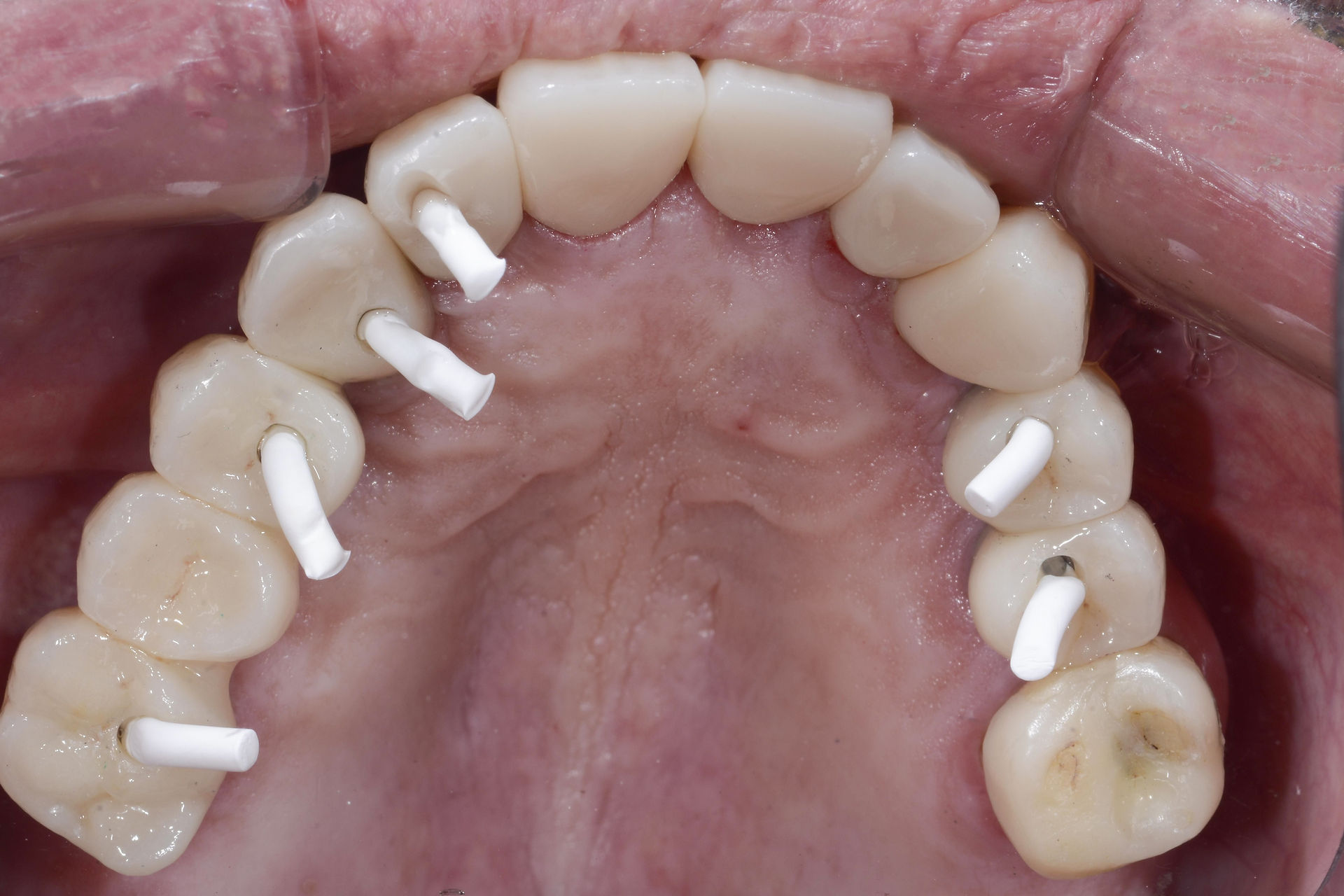
Case 1 — Single Posterior Screw-Retained Implant Crown
A mandibular posterior single-unit screw-retained restoration was managed using one 3 cm Alpha 2.0 piece cut from a single rod. .


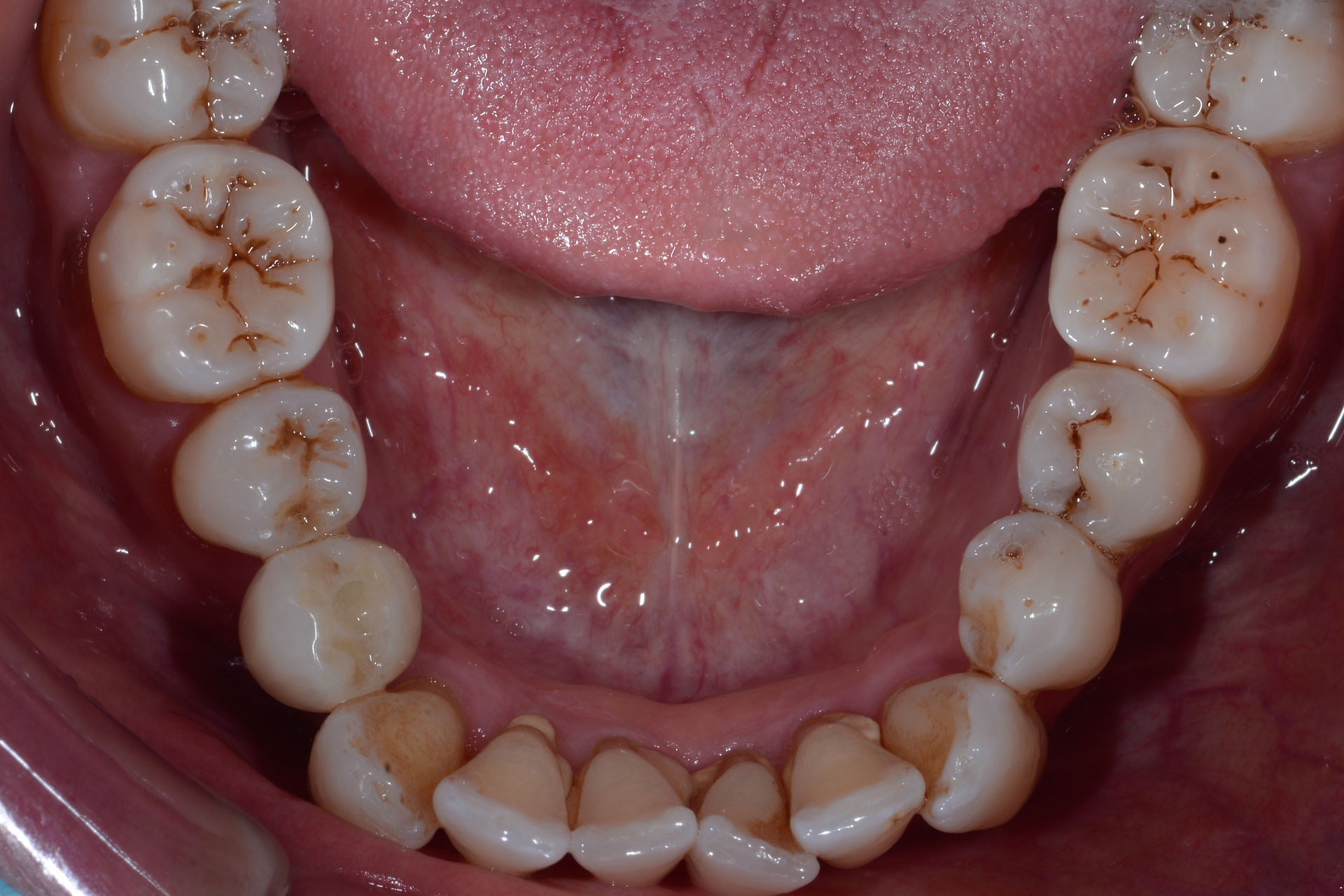

Case 2 — Two Posterior Screw Retained Molar Restorations
Two mandibular posterior single-unit screw-retained molar restorations were managed using two 3 cm Alpha 2.0 pieces cut from a single rod.
Case 3 — Full-Arch Screw-Retained Prosthesis
A full-arch mandibular implant prosthesis with four screw-access channels was restored using three 3 cm pieces. For each posterior larger size screw channel, a single 3 cm rod was used. A third single 3 cm rod was further cut into two 1.5 cm pieces which were used to close the 2 anterior smaller size screw channels.
Why It Matters: Peace of Mind and Clinical Logic
The screw channel may be invisible once the restoration is seated, but its management has consequences that extend across the entire life of the implant supported restoration. A medical-grade material, purpose-engineered for clinical efficiency — is not an upgrade that requires justification. It is the standard that the procedure always warranted.
FirstPlug Alpha 2.0 makes an already excellent system more efficient. A workflow that respects both your time and your patients' long-term outcomes.
Start with an Alpha 2.0 Starter Pack
FirstPlug Alpha 2.0 is available on the 35Newtons® website as a standalone refill (50 rods) or as a Starter Pack that includes the Barrier Plugger™ and Barrier Excavator™ — the only instruments purpose-built for this system.


Comments